




Peptides for Menopause: Their Impact on Hormone Balance, Energy, and Libido


Key Takeaways
- Menopause is not just the end of the menstrual cycle, it’s a systemic neurological and endocrine shift.
- PT-141 (bremelanotide) is the only peptide in this category with FDA approval for sexual health in women, specifically for hypoactive sexual desire disorder (HSDD). But there are many peptides that can treat menopause-related symptoms.
- Growth hormone secretagogues like sermorelin and ipamorelin are being used in longevity clinics to address the metabolic slowdown, muscle loss, and sleep disruptions that come with menopause.
- Most peptides discussed here are investigational and should only be used under the supervision of a qualified healthcare provider.
- Peptide therapy is most effective as part of a comprehensive hormone optimization strategy. In research, they’re often used along with hormone replacement therapy (HRT)
- What Is Menopause, Really? (And Why Your Body Feels Like a Different Person)
- Which Peptides Are Being Studied for Menopause Symptoms?
- Is Peptide Therapy Safe for Women in Menopause?
- What the Research Shows
- How Do I Find a Provider Who Offers Peptide Therapy for Menopause?
- Frequently Asked Questions
- Scientific References
What Is Menopause, Really? (And Why Your Body Feels Like a Different Person)
If you’re reading this, you probably don’t need the clinical definition of menopause. You know what it’s like. It feels like waking up at 3 a.m. staring at the ceiling. You see your body composition shifting even though your diet and workouts haven’t changed. You notice your energy and sex drive have quietly left the building. A growing number of women in perimenopause and menopause are exploring peptide therapy as part of a broader hormone optimization strategy.
Peptides are not a replacement for foundational hormone therapy, but for women navigating the frustrating symptoms of perimenopause and menopause, specific peptides are being studied for their ability to target the exact pathways where the body is struggling.

As your ovaries produce less estrogen and progesterone, the communication loop between your brain, the hypothalamus and pituitary gland, and your reproductive system start to misfire. This hormonal disruption triggers a cascade of downstream effects:1
- Vasomotor instability: The brain’s temperature control center gets confused, leading to hot flashes and night sweats.
- Metabolic slowdown: Insulin sensitivity drops, making weight gain easier and weight loss much harder.
- Neurological changes: Neurotransmitter levels shift, driving mood swings, anxiety, and the classic “brain fog.”
- Tissue degradation: Without the protective effects of estrogen, collagen production plummets, joint pain increases, and bone density drops.
While traditional HRT replaces the missing hormones, peptide therapy takes a different approach. Peptides are short chains of amino acids that act as precise signaling molecules. Instead of replacing hormones directly, they tell specific cells to perform certain jobs, like releasing growth hormone, initiating tissue repair, or regulating sleep cycles.
Which Peptides Are Being Studied for Menopause Symptoms?
Research into peptide therapy for women’s health is evolving rapidly. While many peptides are still investigational, several have emerged as focal points for managing the most stubborn symptoms of the transition to menopause.

What Peptide Helps WithLow LibidoDuring Menopause?
One of the most distressing, and least talked about, symptoms of menopause is hypoactive sexual desire disorder (HSDD), commonly known as low libido. While testosterone replacement is often discussed, two peptides are making significant waves in this space.
PT-141 (Bremelanotide)
PT-141 is unique because it is one of the few peptides with full FDA approval for sexual health in women. Unlike medications that target blood flow for things like erectile dysfunction (ED), PT-141 works directly on the central nervous system. It binds to melanocortin receptors in the brain, activating the neural pathways responsible for sexual desire and arousal.2
For women experiencing a profound loss of libido due to hormonal shifts, PT-141 dosage for women is typically administered via a subcutaneous injection prior to sexual activity. Because it targets the brain’s desire centers rather than the physical mechanics of sex, it addresses the exact root cause of HSDD, not just the symptoms.
Kisspeptin-10
Kisspeptin is often called the “master regulator” of human reproduction. It sits at the very top of the hormonal cascade, telling the brain to release gonadotropin-releasing hormone (GnRH), which then triggers the release of luteinizing hormone (LH) and follicle-stimulating hormone (FSH).
During menopause, this signaling pathway becomes erratic. Research on kisspeptin-10 for women suggests it may help stabilize this communication loop. Early clinical studies indicate that kisspeptin administration can stimulate hormone release and may play a role in regulating mood and sexual behavior.3
Can Peptides Help WithHot Flashes and SleepDuring Menopause?
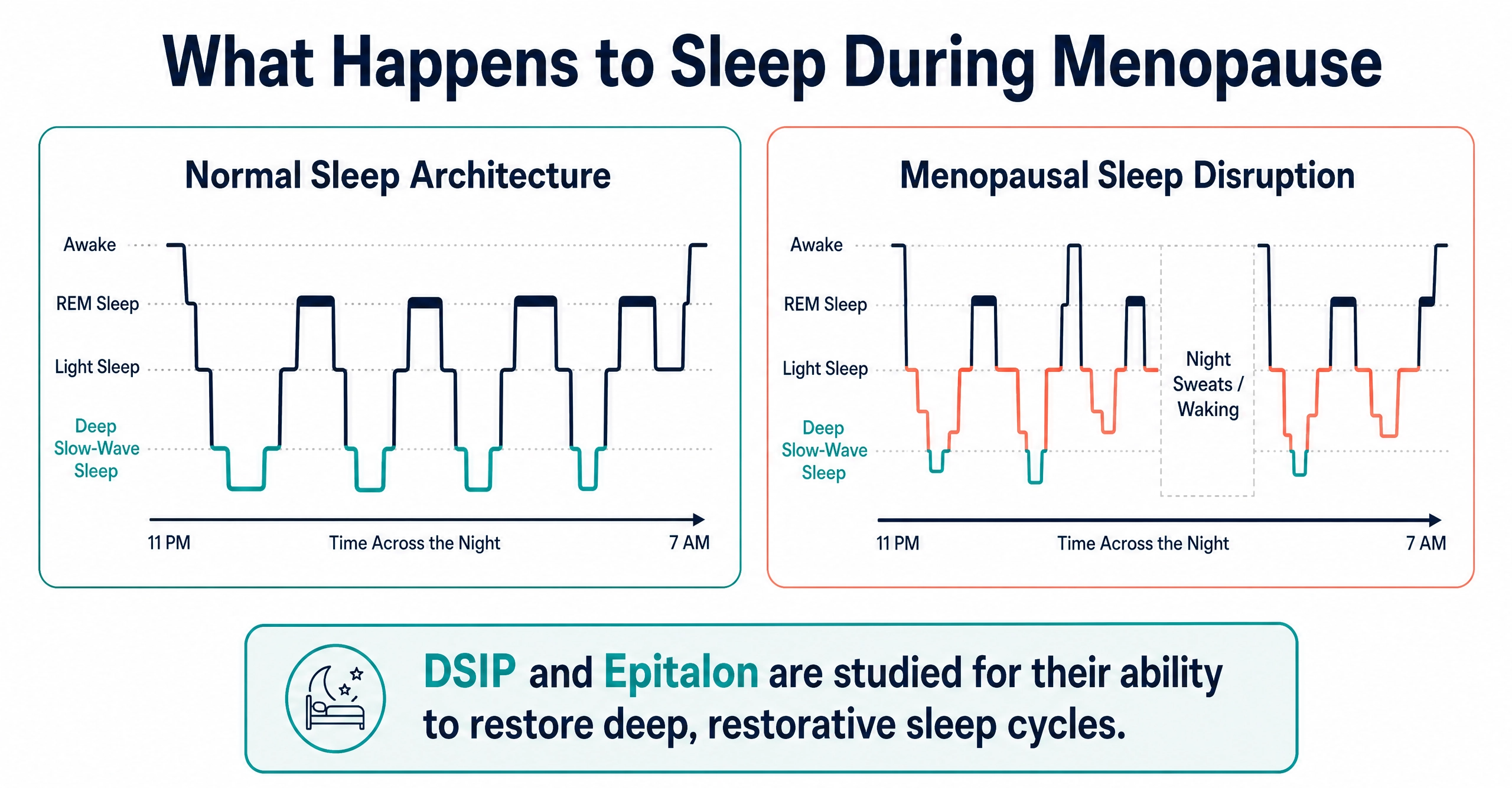
If there is one symptom that destroys quality of life during perimenopause, it is the combination of night sweats and chronic insomnia. The hormonal disruption of menopause directly interferes with sleep architecture, particularly the deep, restorative slow-wave sleep that the body needs to recover and repair.
DSIP (Delta Sleep-Inducing Peptide)
Deep, restorative sleep (known as slow-wave or delta sleep) is heavily disrupted during menopause. DSIP, also known as emideltide, is a naturally occurring neuromodulator that has been studied for its ability to promote exactly this type of sleep.
Research on DSIP for sleep suggests it helps recalibrate the body’s circadian rhythms and normalizes sleep architecture.4 For menopausal women who are waking at 3 a.m. unable to fall back asleep, DSIP peptide for sleep is often explored as an investigational option to restore the deep sleep necessary for cognitive function and physical recovery.
Epitalon
Epitalon is a synthetic peptide based on a natural extract from the pineal gland, the part of the brain responsible for melatonin production. As we age, pineal gland function declines, leading to lower melatonin levels and disrupted sleep-wake cycles.
Epitalon peptide is heavily researched in the anti-aging community for its potential to lengthen telomeres, the protective caps on our DNA.5 For menopausal women, its immediate clinical interest lies in its ability to support natural melatonin production, potentially helping restore normal sleep patterns while offering broader longevity benefits.
What Peptides Help WithWeight Gain and EnergyDuring Menopause?
The “menopause middle” is not in your head. As estrogen drops, body fat distribution shifts from the hips and thighs to the abdomen, and muscle mass naturally declines. This is compounded by a natural age-related drop in human growth hormone (HGH), a decline that accelerates significantly during the menopausal transition.
Sermorelin and Ipamorelin / CJC-1295
Rather than taking synthetic human growth hormone, which carries significant risks and is strictly regulated, many longevity clinics use growth hormone secretagogues (GHS) like sermorelin and ipamorelin. They are called secretagogues because these peptides signal the pituitary gland to produce and release your body’s own natural growth hormone.
Sermorelin has been shown to benefit women during menopause by increasing lean muscle and decreasing visceral fat (the deep belly fat that wraps around organs.) Clinical research also shows:
- enhanced cellular energy and stamina
- better skin elasticity
- improved deep sleep6
When women search for sermorelin weight loss or ipamorelin weight loss, this is the mechanism they’re looking for: restoring growth hormone levels to help fight the metabolic slowdown that makes menopausal weight gain so stubborn.
Can Peptides SupportMood and Emotional WellbeingDuring Menopause?
The mood swings, anxiety, and emotional flattening of menopause are not “just hormones.” They are driven by real, measurable shifts in neurotransmitter activity, shifts that affect how the brain processes stress, connection, and reward.
Oxytocin
Often called the “love hormone” or “bonding hormone,” oxytocin plays a massive role in emotional regulation, stress reduction, and social connection. Research shows that as women transition into menopause, natural oxytocin levels decrease, increasing susceptibility to mood disorders and anxiety.

An oxytocin supplement for women (typically administered as an investigational nasal spray or tablet under the tongue) is being explored to help ease the emotional turbulence of menopause. Clinical studies suggest it can decrease cortisol levels, reduce anxiety, and promote a sense of calm and wellbeing.7
What AboutJoint Pain and InflammationDuring Menopause?
Estrogen is highly protective of joints and connective tissue. When it drops, many women experience sudden, widespread joint pain and stiffness, sometimes called menopause arthritis, that can appear seemingly overnight.
BPC-157
Body Protection Compound-157 (BPC-157) is one of the most widely studied peptides for tissue repair and inflammation. It works by accelerating angiogenesis, the formation of new blood vessels, which brings oxygen and nutrients to damaged tendons, ligaments, and gut tissue.
For menopausal women dealing with sudden joint pain, frozen shoulder, or systemic inflammation, BPC-157 is frequently discussed in longevity medicine circles. Currently BPC-157 is not approved in the US, although an FDA advisory committee has recommended that the FDA allow certain compounding pharmacies to dispense it. A decision is expected early next year.
Is Peptide Therapy Safe for Women in Menopause?
The science behind peptides is genuinely promising. But most peptides used in longevity medicine are not FDA-approved for the treatment of menopause symptoms. They are considered investigational. Because peptides act as powerful signaling molecules, they must be used with precision and under medical supervision.
Growth hormone secretagogues like sermorelin are generally considered safer than synthetic HGH because they rely on the body’s natural feedback loops, but they should still be monitored carefully, especially in patients with a history of cancer. Oxytocin and kisspeptin carry their own considerations depending on individual hormone profiles.
What the Research Shows
The peptides discussed in this article have been studied in published research. The table below summarizes the current state of the evidence.
| Peptide | Menopause Symptom Studied | What Research Has Shown | Evidence Level |
|---|---|---|---|
| PT-141 (Bremelanotide) | Low libido / HSDD | Phase 3 trials showed significant improvements in desire and reduction in distress in women with HSDD. FDA-approved for HSDD; used off-label in menopausal women.2 | FDA-approved (for HSDD only) |
| Kisspeptin-10 | Hormonal regulation, libido | Research in postmenopausal women found that kisspeptin administration stimulated LH secretion, suggesting a role in supporting the hormonal signaling cascade that declines during menopause.3 | Early human |
| DSIP | Insomnia, sleep architecture | Studies in chronic insomnia patients found that DSIP administration was associated with improvements in slow-wave sleep and reduced nighttime waking. Research in menopausal populations is limited.4 | Early human |
| Epitalon | Sleep disruption, cellular aging | Laboratory studies showed epitalon induced telomerase activity and telomere elongation in human somatic cells. Separate research linked it to improved melatonin regulation and sleep quality markers.5 | Early human /preclinical |
| Sermorelin | Weight gain, fatigue, body composition | Research in adults with growth hormone deficiency showed sermorelin increased IGF-1 levels and improved body composition markers. Off-label use in menopausal women is based on this mechanism.6 | Clinical use (off-label) |
| Ipamorelin | Weight gain, energy, sleep | Studies found ipamorelin selectively stimulated GH release without significant increases in cortisol or prolactin, distinguishing it from earlier secretagogues. Human menopause-specific trials are limited.6 | Early human |
| Oxytocin | Mood, anxiety, emotional regulation | Research has linked declining oxytocin levels in menopausal women to increased anxiety and mood instability. Studies suggest oxytocin administration may reduce cortisol and support emotional wellbeing.7 | Early human |
| BPC-157 | Joint pain, inflammation | Animal studies showed BPC-157 accelerated tissue repair and reduced inflammatory markers. Large-scale human trials are lacking. | Preclinical (category 2, not able to be compounded) |
How Do I Find a Provider Who Offers Peptide Therapy for Menopause?
If you have symptoms of perimenopause or menopause and want to learn more about peptide therapy, the most important step is speaking with a qualified healthcare provider. The peptides in this article are not FDA-approved for menopause, and the research, while promising, is still developing. A licensed clinician can review your full hormonal panel, assess whether peptide therapy is best for your situation, and ensure any treatment is sourced from a licensed compounding pharmacy.
PeptideMatch.io maintains a directory of providers who are familiar with the emerging science of peptides and integrative women’s health. Finding the right provider means finding someone who will look at the full picture, not just one symptom.
You do not have to navigate this transition alone.
Frequently Asked Questions
What peptides are used for menopause?
What is the best peptide for low libido in women?
Can peptides help with menopausal weight gain?
Are there peptides for menopause sleep problems?
Is peptide therapy safe for menopausal women?
Scientific References
- Guida M, Sardo ADS, Bramante S, et al. Effect of a phytoestrogen compound on the menopause symptoms. Gynecological Endocrinology. 2006;22(11):645-648.
- Kingsberg SA, Clayton AH, Portman D, et al. Bremelanotide for the treatment of hypoactive sexual desire disorder: two randomized phase 3 trials. Obstetrics and Gynecology. 2019;134(5):899-908.
- Lippincott MF, Chan YM, Seminara SB. Continuous kisspeptin administration in postmenopausal women: impact of estradiol on luteinizing hormone secretion. The Journal of Clinical Endocrinology and Metabolism. 2017;102(6):2091-2099.
- Bes F, Hofman WF, Schuur J, Van Boxtel CJ. Effects of delta sleep-inducing peptide on sleep of chronic insomniacs. Neuropsychobiology. 1992;26(4):193-197.
- Khavinson VK, Bondarev IE, Butyugov AA. Epithalon peptide induces telomerase activity and telomere elongation in human somatic cells. Bulletin of Experimental Biology and Medicine. 2003;135(6):590-592.
- Sinha DK, Balasubramanian A, Tatem AJ, et al. Beyond the androgen receptor: the role of growth hormone secretagogues in the modern management of body composition in hypogonadal males. Translational Andrology and Urology. 2020;9(Suppl 2):S149-S159.
- Dunietz GL, Lisabeth LD, Shedden K, et al. Restless legs syndrome and sleep-wake disturbances in pregnancy. Journal of Clinical Sleep Medicine. 2017;13(7):863-870.
Legal & Medical Disclaimer
The information provided on this page by PeptideMatch.io is intended solely for educational and informational purposes. It does not constitute, and should not be interpreted as, professional medical advice, diagnosis, or treatment. Always consult a licensed physician or qualified healthcare provider before beginning any peptide therapy or making changes to an existing treatment plan. PeptideMatch.io does not prescribe, dispense, or endorse any specific therapeutic protocol. Individual results may vary, and no outcomes are guaranteed.
©2026 PeptideMatch.io. All Rights Reserved. This educational content is the exclusive intellectual property of PeptideMatch.io. Reproduction, distribution, republication, or transmission of this material, in whole or in part, in any form or by any means, is strictly prohibited without the prior written consent of PeptideMatch.io. For licensing or reprint inquiries, please contact content@peptidematch.io.
Related Posts



Ready to take the next step?
Find a verified peptide therapy provider or list your practice and connect with patients actively seeking trusted care.