



Small Molecules, Big Impact: The Fascinating History of Peptides


Key Takeaways
- Peptides are small chains of amino acids. Your body makes many of them naturally, and they help send messages between cells. Some of those messages control things like blood sugar, appetite, and growth.
- People have been studying peptides for more than a century. Early scientists learned how amino acids link together. That work gave us the building blocks for peptide medicines.
- Insulin was one of the first big breakthroughs. It showed that a substance the body makes naturally could also become a life-saving medicine. It changed how doctors could care for people with diabetes.
- Scientists got better at making peptides in the lab. That made it easier to study them, improve them, and turn some of them into medicines that last longer in the body.
- Peptide therapy is still growing, but every peptide is different. Some peptide medicines are FDA-approved for specific uses. Others are still being studied or are compounded, which means they have not gone through the same FDA approval process.
The history of therapeutic peptides is a story that spans more than a century. From the first amino acid isolated in a French laboratory to the blockbuster peptides reshaping modern medicine, this journey is one of the most remarkable in science. It involves brilliant chemists, happy accidents, Nobel Prizes, and even a few venomous lizards. It is the story of how scientists learned to speak the body’s own chemical language, decoding the microscopic signals that keep us alive and healthy. From the earliest days of extracting compounds from animal tissue to the modern era of artificial intelligence and computer aided drug design, the evolution of peptide science is a testament to human ingenuity.
To truly appreciate the power of peptide therapy today, we have to look back to the early 19th century and the key milestones that brought these microscopic messengers out of the lab and into the clinic.
Wait… What’s a Peptide, Exactly? A peptide is simply a short chain of amino acids linked together. You can think of them as tiny proteins. While proteins might have hundreds of amino acids folded into complex three-dimensional shapes, peptides usually have between two and 50 amino acids. They act as messengers in the body, traveling through the bloodstream to tell cells what to do. Because they are smaller than proteins, they can often penetrate tissues more easily, making them ideal candidates for medical treatments.
Pre 20th Century: The Foundations of Chemistry
Before scientists could build peptides, they had to figure out what they were made of. The story begins in the early 1800s, a time when chemistry was still finding its footing as a modern science. Researchers were obsessed with understanding the fundamental building blocks of life, leading to the discovery of amino acids.
In 1820, a French chemist named Henri Braconnot was experimenting with gelatin, trying to understand its composition. By boiling it with sulfuric acid, he isolated a sweet tasting substance. He had just discovered glycine, the simplest of all amino acids. It was monumental. Over the next few decades, chemists across Europe slowly identified the other amino acids that make up the human body, piecing together the alphabet of life one letter at a time.
But identifying the letters was just the first step. How did these individual building blocks connect to form larger structures? That question remained a mystery until the turn of the 20th century, when a brilliant German chemist named Emil Fischer entered the scene.
“Few scientists acquainted with the chemistry of biological systems at the molecular level can avoid being inspired.”
Donald Cram, Nobel Laureate in Chemistry
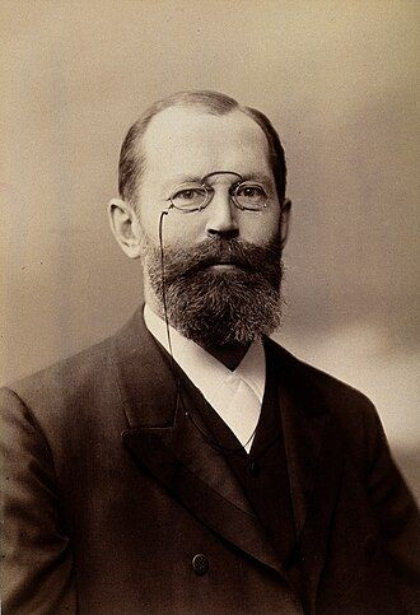
Emil Fischer is widely considered the father of peptide chemistry. In 1902, he proposed a radical new idea: that amino acids link together in long chains, connecting head to tail in a specific sequence. He coined the term “peptide bond” to describe this connection. To prove his theory, Fischer did not just write about it. He managed to synthesize the first artificial dipeptide (two amino acids linked together) in his lab. His groundbreaking work laid the conceptual foundation for all peptide drug development to come, earning him the Nobel Prize in Chemistry in 1902.1
Fischer’s discovery ignited a century of innovation. He proved that the complex molecules of life were not magical or beyond human comprehension. They were chemical structures that could be understood, mapped, and eventually, recreated.
Early 20th Century: Breakthroughs in Medicine
Understanding what peptides were was one thing. Using them as medicine was another entirely. The transition from theoretical chemistry to life saving medicine happened in the early 1920s, and it remains one of the most famous and impactful stories in medical history.
At the time, a diagnosis of Type 1 diabetes was essentially a death sentence. Patients wasted away as their bodies became unable to process sugar.

But a Canadian surgeon named Frederick Banting and his assistant Charles Best had an idea. Working in a hot, cramped laboratory at the University of Toronto in the summer of 1921, they managed to isolate a mysterious substance from the pancreases of dogs. They called it insulin.
In January 1922, a 14-year-old boy named Leonard Thompson became the first person to receive an insulin injection. He was near death, slipping in and out of a diabetic coma, and weighed just 65 pounds. The injection worked. His blood sugar dropped, his strength returned, and he survived. The first true peptide therapy was born. It was a miracle that reversed the diabetes death sentence overnight, changing the course of medical history forever.2
Interesting Fact: Because early insulin was extracted from the pancreases of cows and pigs, it took a massive amount of animal tissue to produce a single dose, a challenge that made the case for finding a way to synthesize peptides artificially.
While insulin was a triumph, relying on animal sources wasn’t sustainable. It was expensive, inefficient, and sometimes caused allergic reactions in patients. Scientists needed a way to build these hormones from scratch in a laboratory. The next major milestone arrived in 1953 when American biochemist Vincent du Vigneaud successfully synthesized oxytocin, a peptide hormone responsible for inducing labor and lactation.
This was the first time a peptide hormone had been created entirely in a lab, proving that humans could create these complex biological messengers without relying on animal extracts. Du Vigneaud’s meticulous work demonstrated that synthetic peptides could function exactly like their natural counterparts. He was awarded the Nobel Prize in Chemistry in 1955 for his incredible achievement.3
Mid 20th Century: The Synthesis Revolution
By the late 1950s, scientists knew how to synthesize peptides, but the process was agonizingly slow and incredibly frustrating. Building a peptide chain meant adding one amino acid at a time in a liquid solution, purifying the entire mixture after every single addition, and repeating the process over and over. It could take months to build a single short peptide.
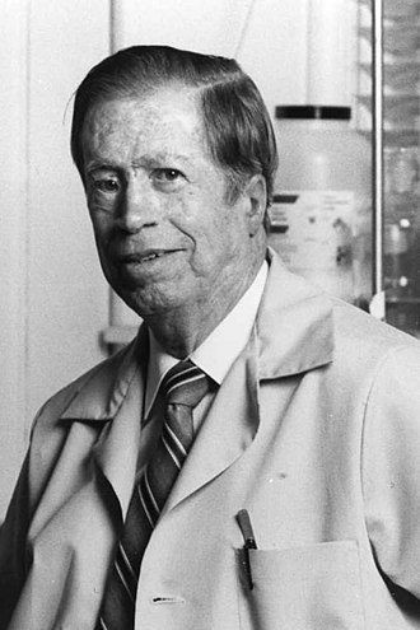
That all changed in 1959 thanks to an American biochemist named R.B. Merrifield. He recognized that the purification steps were the bottleneck, so he invented a radically new technique called Solid Phase Peptide Synthesis (SPPS). He attached the first amino acid to a solid microscopic bead of polystyrene. This anchored the growing peptide chain in place, allowing scientists to wash away the chemical impurities between each step without losing the peptide itself.4
Merrifield’s invention revolutionized the speed and efficiency of peptide drug development. What used to take months could now be done in days, and eventually, hours. It automated the process of peptide creation, opening the floodgates for researchers around the world to experiment with new sequences. The technique was so transformative that he was awarded the Nobel Prize in Chemistry in 1984.
“The development of solid phase peptide synthesis by Bruce Merrifield is one of the most important methodological developments in the history of chemistry.”
The Nobel Prize Committee, 1984
Around the same time another massive milestone was achieved on the other side of the world. In 1965, after years of intense effort and collaboration, a team of Chinese scientists successfully synthesized biologically active bovine insulin. It was the first time a protein of that size and complexity had been created artificially. This monumental achievement cemented China’s position as a world leader in therapeutic peptide research and proved that even the most complex peptide structures could be built from scratch.5
Late 20th Century: Nature’s Hidden Pharmacy
With synthesis techniques mastered, the 1970s and 1980s saw an explosion in peptide discovery. But scientists were not just looking inward at human biology, they were looking outward at nature’s most extreme environments. The natural world had already been producing peptides that were precisely tuned for very specific biological purposes.

Researchers began discovering highly potent, bioactive peptides in the venoms of snakes, scorpions, spiders, and marine cone snails. Because venom must act quickly and specifically to paralyze or kill prey, venom peptides are incredibly precise. They target specific receptors in the nervous system with pinpoint accuracy. This precision makes them excellent templates for targeted drugs, particularly for pain management and neurological conditions.

A Happy Accident in Norway: In 1969, a scientist from the pharmaceutical company Sandoz was on vacation in Hardangervidda, a desolate plateau in Norway. He scooped up a sample of soil to bring back to the lab for routine testing. From that dirt, researchers isolated a fungus producing a unique cyclic peptide. That peptide became Cyclosporine, the revolutionary immunosuppressant drug that prevents the body from rejecting foreign tissue. It made human organ transplant a routine and successful procedure, saving countless lives.6
The 1980s also brought the DNA revolution. Instead of building peptides chemically, scientists learned to program bacteria and yeast to produce human peptides for them. By inserting human genes into these microorganisms, they turned them into microscopic peptide factories. This allowed for the mass production of human insulin, completely replacing the need for animal sources and making the drug safer, cheaper, and more accessible worldwide.
Global Timeline of Peptide Innovation
1820 France
Henri Braconnot discovers glycine, the first amino acid, by boiling gelatin with acid.

1901 Germany
Emil Fischer coins the term “peptide” and begins characterizing amino acid linkages.

1921 Canada
Frederick Banting and Charles Best isolate insulin at the University of Toronto.

1953 United States
Vincent du Vigneaud achieves the first laboratory synthesis of a peptide hormone (oxytocin).

1965 China
A team of Chinese scientists successfully synthesizes active bovine insulin, a major global achievement.

1971 Japan
The Peptide Institute is established in Osaka, pioneering large-scale global peptide manufacturing and research.

Switzerland / Norway 1983
Cyclosporine, from a Norwegian fungus, is developed by Sandoz in Switzerland and revolutionizes organ transplants.

1992 United States
Dr. John Eng discovers exendin-4 in Gila monster venom, paving the way for modern GLP-1 drugs.

2017 Denmark
Novo Nordisk’s semaglutide is approved, cementing Scandinavia’s role as a global leader in peptide-based metabolic treatments.

The Modern Era: Therapeutic Advancements
While early breakthroughs occurred in isolated labs, modern peptide science and pharmacology is a deeply international endeavor. Organizations like the Peptide Institute in Osaka, Japan, established in the 1970s, became critical hubs for commercial peptide manufacturing. Meanwhile, pharmaceutical giants in Denmark and Switzerland drove the commercialization of metabolic and immunosuppressive peptides, proving that turning a fragile molecule into a viable drug requires a global network of collaboration.
Despite all the benefits that researchers had observed in the lab, peptide-based therapeutics always faced one major hurdle: peptides are fragile. If you swallow a peptide, your stomach acids and digestive enzymes break it down just like a piece of steak, long before it can reach your bloodstream. Even if injected, enzymes in the blood often clear natural peptides from the system in a matter of minutes.
In the 1990s and 2000s scientists began finding clever ways to protect peptides and extend their half life. They found ways to shield the molecules, such as attaching them to fatty acids (lipidation) or stapling their structures together so they could survive longer in the harsh environment of the human body. Monitoring peptide side effects in early clinical trials was also a big focus, helping researchers understand which modifications were safe and which introduced new risks. This paved the way for the most significant shift in modern metabolic medicine: the GLP-1 era.
Glucagon-like peptide-1 (GLP-1) is a naturally occurring hormone that regulates blood sugar and appetite. But natural human GLP-1 is incredibly fragile, lasting only about two minutes in the body before being destroyed. The breakthrough came from a highly unlikely source: the venom of the Gila monster, a slow moving, brightly colored lizard native to the American Southwest.

Interesting Fact: The Gila Monster: The discovery of exendin-4 in the venom of the Gila monster (Heloderma suspectum) was entirely accidental. Dr. John Eng was not looking for a diabetes drug; he was simply cataloging hormones in venom. The lizard only eats three or four times a year, using this unique peptide to keep its pancreas dormant until needed.
This peptide in lizard venom functioned almost exactly like human GLP-1, but didn’t degrade as fast. Because it could last longer in the bloodstream, it provided sustained blood sugar control.7
This unexpected discovery led to the development of a new class of long acting GLP-1 receptor agonists. By tweaking the amino acid sequence and adding protective fatty chains, scientists created drugs like semaglutide and tirzepatide that only need to be injected once a week. Therapeutic peptides have completely redefined the treatment of type 2 diabetes and obesity, becoming some of the most prescribed medications in the world. Growth hormone peptides followed a similar path, with researchers engineering longer acting versions of what our bodies produce naturally to address age-related hormone decline.
What is the Future of Peptide Therapy?
Today the FDA has approved over 100 peptide drugs, and the field of peptide therapy research is expanding rapidly. Artificial intelligence and machine learning are being used to design novel peptides from scratch, predicting how they will behave, and interact with human cells before they’re ever synthesized in a physical lab. This approach is dramatically accelerating the drug discovery process.
Researchers are also investigating new methods for oral delivery. For decades, a major goal in peptide research has been developing compounds that can survive the stomach and enter the bloodstream without being destroyed. New formulation technologies, absorption enhancers, and protective coatings are finally making this a reality. Oral peptides will eliminate the need for injections, making these therapies far more convenient and accessible to patients worldwide.
Beyond metabolic health, the applications for peptides are expanding rapidly to areas including oncology, neurology, and infectious disease. Scientists are leveraging antimicrobial peptides to combat resistant bacteria, offering a potential solution to the growing crisis of antibiotic resistance. They’re also developing personalized cancer vaccines using neoantigen based peptides, tailored to the specific genetic mutations of each patient’s tumor, training the immune system to attack the cancer with precision.
From a sweet tasting crystal extracted from gelatin in 1820 to the precision engineered molecules of today, the history of peptides is a testament to human curiosity, perseverance, and innovation. As peptide therapy side effects have become better understood and managed, patient access and physician confidence have grown significantly. As technology continues to advance, the story is really just beginning.
Scientific References
1. Muttenthaler M, King GF, Adams DJ, Alewood PF. Trends in peptide drug discovery. 2021;20(4):309-326. doi:10.1038/s41573-020-00115-8
2. Banting FG, Best CH, Collip JB, Campbell WR, Fletcher AA. Pancreatic extracts in the treatment of diabetes mellitus. 1922;12(3):141-146.
3. du Vigneaud V, Ressler C, Swan JM, Roberts CW, Katsoyannis PG, Gordon S. The synthesis of an octapeptide amide with the hormonal activity of oxytocin. 1953;75(18):4879-4880.
4. Merrifield RB. Solid phase peptide synthesis. I. The synthesis of a tetrapeptide. 1963;85(14):2149-2154.
5. Kung YT, Du YC, Huang WT, et al. Total synthesis of crystalline bovine insulin. 1965;14(11):1710-1716.
6. Borel JF, Kis ZL. The discovery and development of cyclosporine (Sandimmune). 1991;23(2):1867-1874. PMID:2053181
7. Eng J, Kleinman WA, Singh L, Singh G, Raufman JP. Isolation and characterization of exendin-4, an exendin-3 analogue, from Heloderma suspectum venom. 1992;267(11):7402-7405. doi:10.1016/S0021-9258(18)42531-8
LEGAL & MEDICAL DISCLAIMER: The information provided on this page by PeptideMatch.io is intended solely for educational and informational purposes. It does not constitute, and should not be interpreted as, professional medical advice, diagnosis, or treatment. Always consult a licensed physician or qualified healthcare provider before beginning any peptide therapy or making changes to an existing treatment plan. PeptideMatch.io does not prescribe, dispense, or endorse any specific therapeutic protocol. Individual results may vary, and no outcomes are guaranteed.
©2026 PeptideMatch.io. All Rights Reserved. This educational content is the exclusive intellectual property of PeptideMatch.io. Reproduction, distribution, republication, or transmission of this material, in whole or in part, in any form or by any means, is strictly prohibited without the prior written consent of PeptideMatch.io. For licensing or reprint inquiries, please contact content@peptidematch.io .
FAQ

Peptides are short chains of amino acids. Amino acids are the small parts that make up proteins. Your body makes many peptides naturally, and some peptides have also been developed into medicines.
Peptides do different jobs depending on the peptide. Some act like messengers and help cells communicate. Others are used in medicines that target specific parts of the body, such as blood sugar, hormones, pain, or the immune system.
Your body makes some peptides on its own. Scientists have also found peptides in nature, including animals, plants, and microorganisms. Today, researchers can make and change peptides in the lab to study how they might work as medicines.
Scientists have studied peptides for more than one hundred years. Insulin research in the early twentieth century helped show that peptides could become important medicines. Since then, new ways to make and improve peptides have helped move the field forward.
Some peptide medicines are FDA-approved for specific health conditions. But peptides are not all the same, and being called a peptide does not mean a product is FDA-approved. Compounded medications are not FDA-approved, so the FDA does not check their safety, effectiveness, or quality before they are sold.
Related Posts
What happens when you combine therapeutic peptides? The biology behind peptide

Both are studied for tissue repair and healing. But they work differently and target different systems. Here is what the research
Your body makes natural peptides that send signals fast, but they disappear almost as quickly as they arrive. Here's how
Ready to take the next step?
Find a verified peptide therapy provider or list your practice and connect with patients actively seeking trusted care.