



LEGAL & MEDICAL DISCLAIMER: The information provided on this page by PeptideMatch.io is intended solely for educational and informational purposes. It does not constitute, and should not be interpreted as, professional medical advice, diagnosis, or treatment. Always consult a licensed physician or qualified healthcare provider before beginning any peptide therapy or making changes to an existing treatment plan. PeptideMatch.io does not prescribe, dispense, or endorse any specific therapeutic protocol. Individual results may vary, and no outcomes are guaranteed.
What is Pinealon?
Pinealon is a synthetic “ultrashort” peptide consisting of just three amino acids: glutamic acid, aspartic acid, and arginine (often referred to as the EDR peptide). It belongs to a specialized class of compounds known as peptide bioregulators, which were originally developed by researchers in St. Petersburg, Russia.
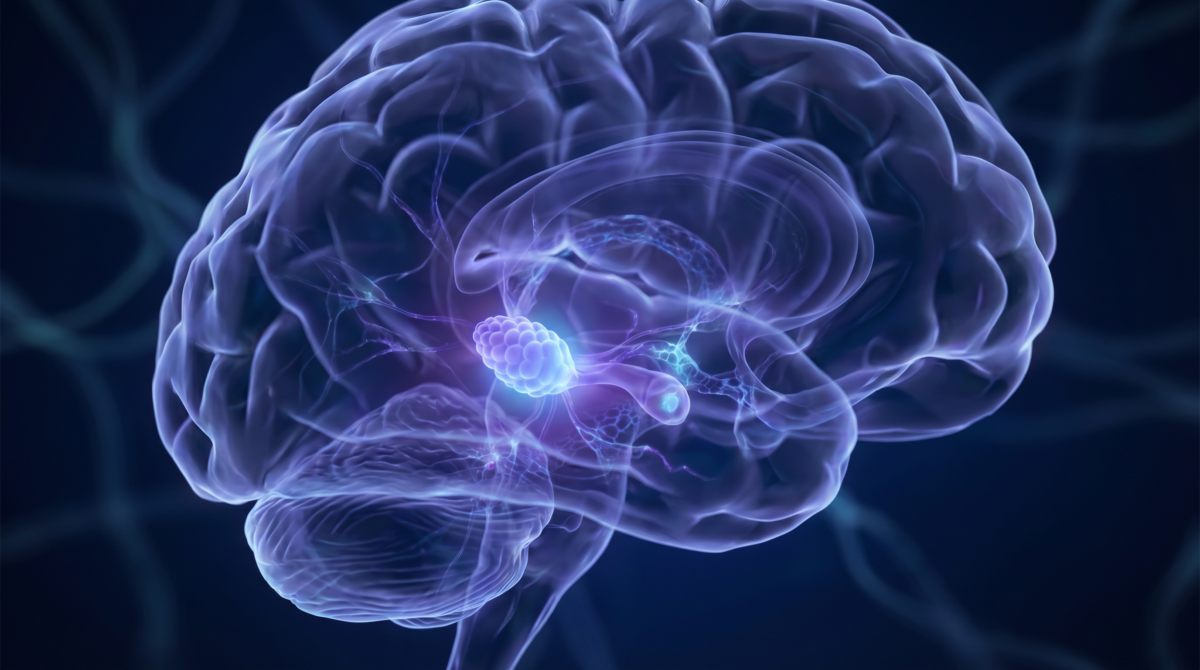
The name “Pinealon” reflects its connection to the pineal gland, a small structure deep in the brain that is primarily responsible for producing melatonin and regulating the body’s internal clock (circadian rhythm). However, Pinealon’s effects extend beyond just sleep. It is considered a neuroprotective peptide because research suggests it can help protect brain cells from damage and support overall brain health.
Because it is so small, Pinealon can easily enter cells and even penetrate the nucleus, where it interacts directly with DNA. This makes it an “epigenetic regulator” (a compound that can turn certain genes on or off without changing the underlying genetic code itself).1
Fast Facts
| FULL NAME | Pinealon (Glu-Asp-Arg or EDR Peptide) |
| CLASS | Ultrashort Peptide Bioregulator |
| HOW IT WORKS | Interacts directly with DNA to regulate genes involved in neuronal survival and circadian rhythms1 |
| AREAS OF STUDY | Preclinical models for neuroprotection, cognitive function, and sleep cycle regulation |
| REGULATORY STATUS | Not approved by the FDA or EMA for clinical use; studied primarily in Russia |
How Does Pinealon Work?
1. Epigenetic Gene Regulation
At the most fundamental level, Pinealon works by binding to specific regions of DNA. By doing so, it acts as a switch that activates genes responsible for cell survival and protein synthesis. This epigenetic mechanism allows the peptide to encourage the brain to produce its own protective proteins when under stress.1
2. Calming Oxidative Stress
One of the primary threats to brain health is oxidative stress, an imbalance where harmful molecules called free radicals accumulate and damage healthy cells. Studies show that Pinealon helps suppress the buildup of these free radicals. By reducing this toxic burden, it helps keep neurons viable and healthy, even in challenging environments.2
3. Modulating Brain Messengers
Pinealon also influences the hypothalamus, a region of the brain that acts as a central command center. Research indicates it can help correct imbalances in norepinephrine, a key chemical messenger involved in wakefulness and the body’s daily rhythms. By stabilizing these signals, Pinealon supports a healthy circadian cycle.3
What Does the Research Say?
While human clinical data is currently lacking, Pinealon has been extensively studied in laboratory and animal models. Here is what the preclinical research suggests:
| THERAPEUTIC AREA | WHAT RESEARCH SUGGESTS | EVIDENCE LEVEL |
|---|---|---|
| Neuroprotection | In cell cultures, it significantly increased the survival rate of neurons by suppressing the accumulation of damaging free radicals.2 | Preclinical |
| Cognitive Function | Animal models exposed to neurotoxic conditions during development showed improved spatial learning and memory after treatment with the peptide.4 | Preclinical |
| Circadian Rhythms | It helped correct disrupted daily patterns of key brain chemicals (like norepinephrine) in the hypothalamus of laboratory models.3 | Preclinical |
Neuroprotection and Cognitive Support
The brain is highly susceptible to damage from oxidative stress, a process that accelerates as we age and plays a central role in cognitive decline. Much of the research on Pinealon focuses on its potential as a cognitive enhancement peptide by addressing this underlying stress.
Enhancing Cell Survival: In laboratory studies of neuronal cells, researchers found that adding Pinealon to the environment significantly suppressed the levels of free radicals. This reduction in oxidative stress directly correlated with an increase in the overall viability and survival of the cells.2
Protecting Memory Pathways: Animal studies have explored its effects on subjects exposed to neurotoxic conditions (such as elevated homocysteine levels, which damage the brain). The research showed that Pinealon administration helped protect the developing brain, resulting in better spatial orientation and learning abilities later in life compared to untreated controls.4
These findings suggest that by acting as a shield against cellular stress, this nootropic peptide may help preserve the neural pathways critical for learning and memory.
Supporting Healthy Circadian Rhythms
Given its namesake connection to the pineal gland, Pinealon is also studied for its role in regulating the body’s internal clock. A healthy circadian rhythm is essential not just for restful sleep, but for overall brain health and cognitive function.
When the brain is subjected to chronic stress or neurotoxic conditions, the natural daily rhythms of important chemical messengers can become disrupted. In animal models, researchers observed that Pinealon helped correct these disturbances, specifically stabilizing the daily fluctuations of norepinephrine in the hypothalamus.3
By helping to restore these natural patterns, the research suggests Pinealon may support the brain’s ability to maintain a healthy sleep-wake cycle, which is a foundational element of long-term neurological health.
Safety Profile
Because Pinealon is an ultrashort peptide composed of natural amino acids, it is generally considered to have a low risk of toxicity in laboratory settings. In the available preclinical studies, researchers have not reported significant adverse effects.
However, it is crucial to understand the limitations of the current data.
Important Considerations
| Approval Status | Pinealon is not approved by the FDA or the European Medicines Agency (EMA) for any clinical use. It remains an experimental research compound. |
| What We Still Don’t Know | All published data comes from cell cultures and animal models. There are no large-scale, peer-reviewed human clinical trials available to confirm its safety or effectiveness in people. |
| How It’s Made is Crucial | As a synthetic peptide, its purity and concentration can vary depending on the manufacturing source, which is a critical factor in research settings. |
| Medical Supervision is Essential | Always work with a licensed healthcare provider before considering any form of peptide therapy. |
| The Bottom Line: Pinealon is a fascinating example of how ultrashort peptides can interact directly with our DNA to influence cellular health. By acting as an epigenetic switch, the research suggests it can help calm oxidative stress, protect vulnerable neurons, and support the brain’s natural circadian rhythms. While the preclinical data paints a promising picture of a multi-functional brain health peptide, the lack of human clinical trials means its true potential and safety profile in humans remain unknown. For now, it continues to be a compelling subject of study in the fields of neuroprotection and anti-aging research. |
Scientific References
- Khavinson VKh, Linkova NS, Kozhevnikova EO, et al. Neuroepigenetic mechanisms of action of ultrashort peptides. International Journal of Molecular Sciences. 2022;23(8):4259.
- Khavinson V, Ribakova Y, Kulebiakin K, et al. Pinealon increases cell viability by suppression of free radical levels and activating proliferative processes. Rejuvenation Research. 2011;14(5):535-541.
- Kozina LS, Arutjunyan AV. Pinealon corrects hyperhomocysteinemia-induced disturbances of the diurnal dynamics of hypothalamic norepinephrine content in female rats. Neurochemical Journal. 2014;8(3):202-207.
- Arutjunyan A, Kozina L, Khavinson V, et al. Pinealon protects the rat offspring from prenatal hyperhomocysteinemia. International Journal of Clinical and Experimental Medicine. 2012;5(2):179-185.
©2026 PeptideMatch.io. All Rights Reserved. This educational content is the exclusive intellectual property of PeptideMatch.io. Reproduction, distribution, republication, or transmission of this material, in whole or in part, in any form or by any means, is strictly prohibited without the prior written consent of PeptideMatch.io. For licensing or reprint inquiries, please contact content@peptidematch.io.
Related Posts

Orexin is a dual-peptide system studied for its critical role in maintaining alertness, regulating appetite, and driving energy

Everything you need to know about how therapeutic peptides work, how they are made, their safety and legal status, and the eight

The discovery of MOTS-c changed the conversation by offering a look at how our mitochondria communicate with the rest of our
Ready to take the next step?
Find a verified peptide therapy provider or list your practice and connect with patients actively seeking trusted care.